The Art of Holding Hands

We’re excited to invite allies and activists to share their perspectives on our blog. This guest blog is written by Auburn Marriott, NO MORE Student Ambassador.
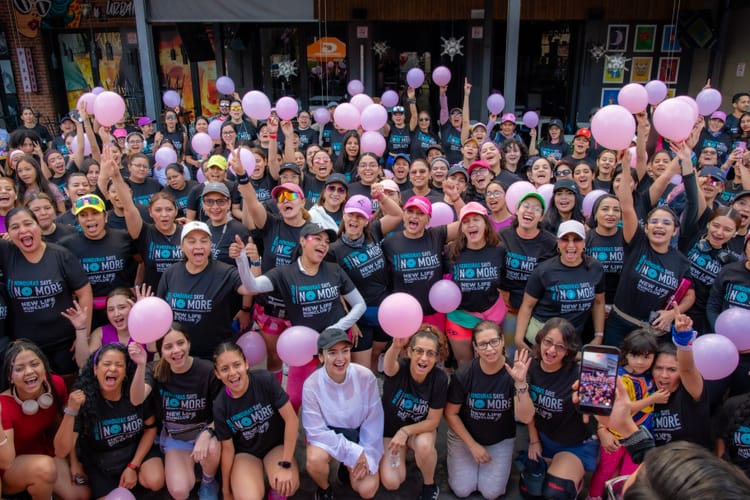
To get involved in raising awareness and empowering survivors and their loved ones, take action during NO MORE Week by sharing resources, hosting an event, or joining the NO MORE Week Challenge.
I hate physical contact with other people. Some might see the word “hate” as too strong of an adjective for any description, but for years of my life I truly could not process the idea of physical contact that would not hurt me. After leaving my abuser of four long years, I refused hugs, touch, and the majority of physical contact even from loved ones. It was not until I held my mother’s hand for the first time after leaving him for the final time, that I felt safe. I am now almost two years into my survivorship, and I have learned, holding hands is my biggest form of trust within a person.
Going back to the start of my new beginning, I waited to leave until he was out of the state for work. My mother bought me a plane ticket from Los Angeles, where I lived at the time, to Michigan for the following day to come see her. For about thirty hours before I could get to her, I sat in my own painfully chronic anxiety of what was happening; the fear of him was constant and overwhelming. When I arrived at the airport and went through TSA, I remember a woman patting me down as normal protocol at LAX airport. What was not typical for me was my reaction to this pat down; I had to hold back my tears and run to the bathroom. With a ten second pat down, I had spiralled into panic and tear-filled flashbacks. I had to calm myself down in that claustrophobic bathroom stall all because of a simple pat-down. I realized that while being in an abusive relationship is deadly and terrifying, leaving can be equally as dreadful.
After this pat down and a long five and half hour flight, I finally landed in Michigan to see my welcoming and relieved mother. For those thirty-five hours after leaving him, I had not felt safe for a second, but when I walked out of the airport gate and saw my mother with her arms wide open, I felt a sense of relief. I sprinted to her and she embraced me with such care. At this moment, I felt like for the first time in four years everything was going to be ok. I could feel her arms around me which felt gentle to the touch but with enough firmness of a hug I knew she was going to protect me. I smelt her conditioner in her hair she has always used and held her hand as we walked back to the car. I did not leave her side once while I was visiting nor did my hand leave hers because she made me feel genuinely safe, a feeling that was unknown for so long.
I quickly learned after this trip I was not particularly enthusiastic about physical touch by individuals outside of some of my family because of the abuse I endured. I allowed my mother in but the thought of anyone outside of this circle was terrifying. My mother has been the constant in my life, which I knew I could trust, but the simplest brush of skin by anyone would cause me to recoil. That said, I am now almost two years into my survivorship, and while I am still not extremely eager for physical touch, I have learned how to trust again and have slowly reintroduced physical touch back into my life. I started hugging my friends and holding their hands as we made our way through crowds, actions I was not comfortable doing for a long time.
I now hold hands with the people in my life relating to all different kinds of relationships, and while some might not know the meaning of the trust I put into a palm embracing palm, I find it comforting that I am able to have physical contact filled with trust rather than fear. The art of holding hands with someone for me as a survivor means that I am giving you my trust to hold me, touch me, and not hurt me.
Not all the people in my life know what holding hands and physical contact means to me or what I endured for years of my life, but the ones who do have told me it has changed their point of view. The people who make me feel safe have been a significant part of my life and survivorship since I left, helping me and giving me resources and love that I never thought were possible in my lifetime.
NO MORE Week is an opportunity to raise awareness about abuse, so that more survivors feel empowered to seek safety, and their loved ones equipped to support them. By sharing resources or helping fundraise in the NO MORE Week Challenge, everyone can play a part in creating this reality.
Together We Can End Domestic and Sexual Violence