Hope in Action: Lessons from NO MORE Week 2026

NO MORE Week is always a powerful moment. It is a moment when we call the world back into activism around gender-based violence — a problem that is both pervasive and preventable.
This year, more than ever, we were reminded that ending domestic and sexual violence is not only necessary — it is possible. But only if we act together.
Gender-based violence affects 1 in 3 women and 1 in 6 men globally. These are not abstract numbers. They represent our colleagues, our neighbors, our friends, and our families. They represent lives disrupted, opportunities lost, and futures reshaped by violence that should never have happened.
And yet, what we have seen during this NO MORE Week gives us reason for hope.
A Global Lens on a Global Issue
This week, we looked at gender-based violence through a global lens, recognizing that while the contexts may differ, the underlying dynamics of power and control are strikingly similar wherever we go.
We have had honest conversations about what suffering means. About what it means for survivors to navigate systems that are often not designed for them. About the long-term impact on families, communities, and economies.
But we have also talked about solutions — and that is where hope lives.
Understanding that this issue is pervasive wherever we go means understanding that the solutions must also be global. No single organization, sector, or country can end domestic and sexual violence alone. Progress depends on collaboration across governments, corporations, civil society, and communities.
Unity is not just a value. It is a strategy.

From Brazil to Honduras: Voices Rising
During NO MORE Week, we witnessed inspiring examples of what collective action looks like in practice.
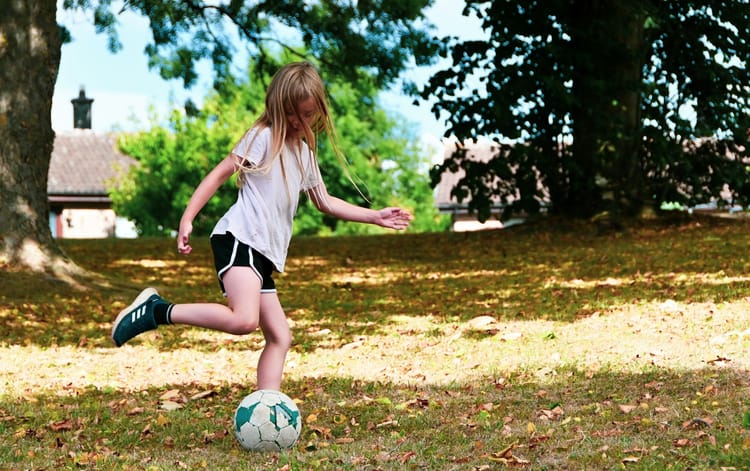
In Brazil, we saw a bold government commitment to use one of the world’s largest women’s sporting events — the FIFA Women’s World Cup 2027 — not only as a celebration of sport, but as a catalyst for social change. Through the launch of the Brazil Says NO MORE initiative Brazil is working to ensure that this global event leaves a lasting legacy: one that strengthens prevention, supports survivors, and uses the power of sport to change culture.
This is what leadership looks like.It is about recognizing that major moments on the world stage can — and should — be used to drive meaningful progress on gender-based violence.
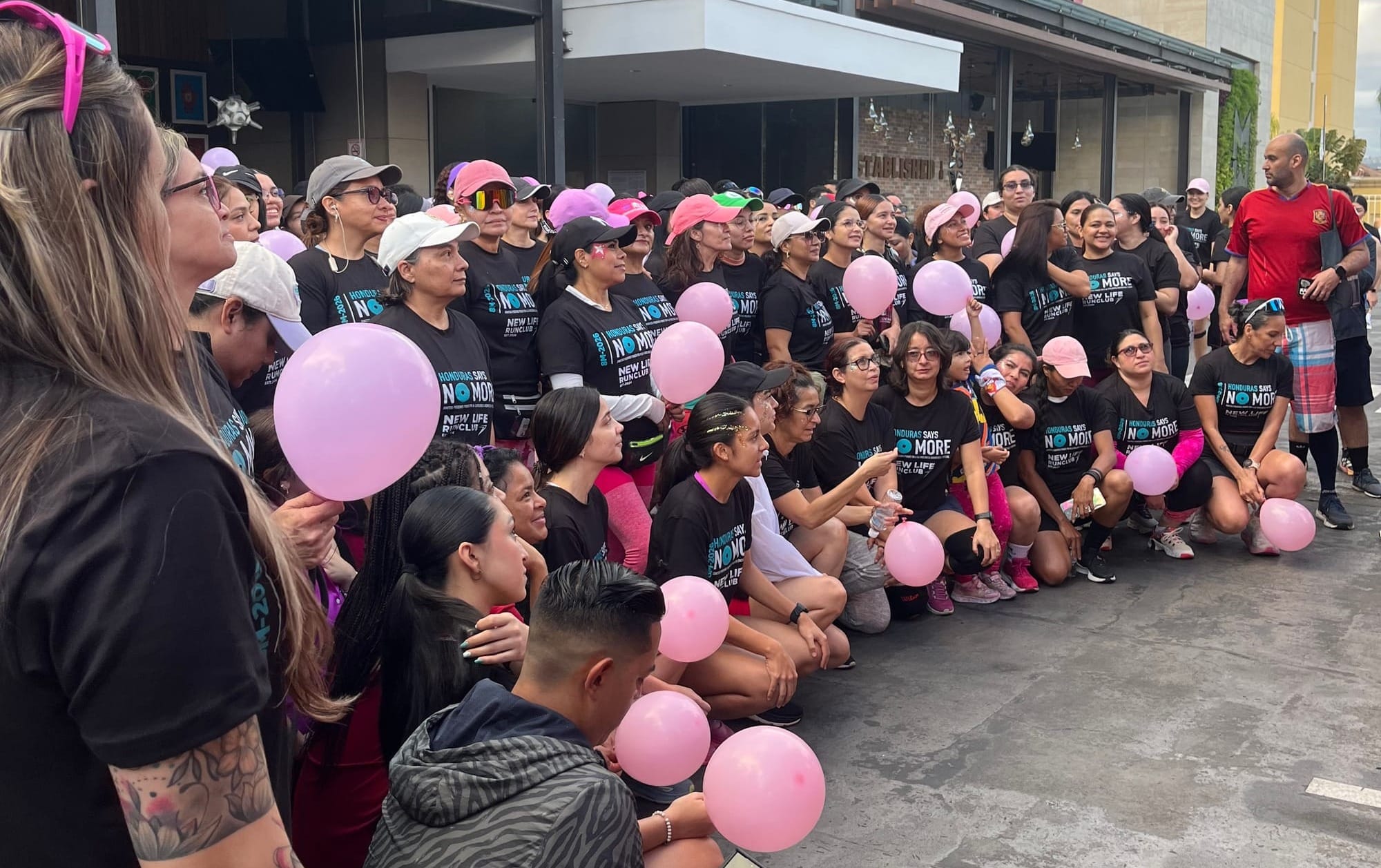
At the same time, in Honduras, we saw women and communities coming together in the streets, raising their voices in a powerful public activation to say NO MORE. These moments of visibility matter. They remind survivors that they are not alone and demonstrate to communities that silence is no longer acceptable.
From government commitments to grassroots mobilization, these actions show that change is possible at every level.
The Power of Collective Action
NO MORE Week is both a reminder and an opportunity. A reminder of the scale of gender-based violence — and an opportunity to say, collectively, that we are tired of it.
Across the world this week, many of you walked, ran, posted, spoke out, and showed up. You used your voices on social media, in workplaces, in schools, and in your communities. Partner organizations came together across sectors, sharing resources and ideas, and strengthening the understanding that this work cannot be done in isolation.
Whether through the NO MORE Week Challenge, community events, or quiet conversations that helped someone feel seen and supported — every action mattered.
Cultural change happens when individuals take action together.
Prevention becomes possible when awareness turns into sustained commitment.
And that is exactly what we are building.
Where Do We Go From Here?
As we close NO MORE Week, the question is not whether this work continues — it must. The question is how we sustain the momentum we have built together.
Here are three ways we can continue moving forward:
1. Keep the conversation going.
Silence allows violence to persist. Talking openly about healthy relationships, consent, and respect — in homes, workplaces, and communities — helps shift norms and expectations.
2. Strengthen collaboration across sectors.
Ending domestic and sexual violence requires partnership. Governments, companies, NGOs, educators, and community leaders all have a role to play. When we work together, our impact multiplies.
3. Support survivors and prevention efforts.
Whether through donations, volunteering, workplace initiatives, or advocacy, continued support for survivor services and prevention programs is essential. Every resource invested helps connect someone to lifesaving support.
We also encourage everyone to explore the resources available through the NO MORE Global Directory and our partner organizations worldwide. These tools exist to support survivors and to help all of us become part of the solution.
A Shared Commitment
This week has shown us what is possible when we come together with purpose.
We have seen governments step forward with commitment.
Communities rise with courage.
Partners collaborate with determination.
Individuals use their voices with clarity and compassion.
Domestic and sexual violence is one of the greatest human rights challenges of our time. But it is also solvable, if we act collectively, consistently, and with urgency.
NO MORE Week is not an endpoint.
It is a checkpoint in a global movement.
As we move forward, let us carry with us the spirit of unity that has defined this week. Let us continue to build a world where survivors are supported, prevention is prioritized, and violence is no longer tolerated.
Together, across borders and sectors, we are saying — and showing — NO MORE.
And together, we will keep going until that vision becomes reality.

Make a Donation
Your contribution creates a lasting global impact by helping us provide free resources, raise awareness, and drive change to end domestic and sexual violence.
Make a DonationTogether We Can End Domestic and Sexual Violence