It’s Not Just Football: How the 2027 Women’s World Cup in Brazil Can Help End Violence Against Women
Each day during NO MORE Week, we’re highlighting how communities around the world are taking action to end abuse. Today, join us on the KNOW MORE Blog and NO MORE’s social channels as we spotlight efforts across Latin America.
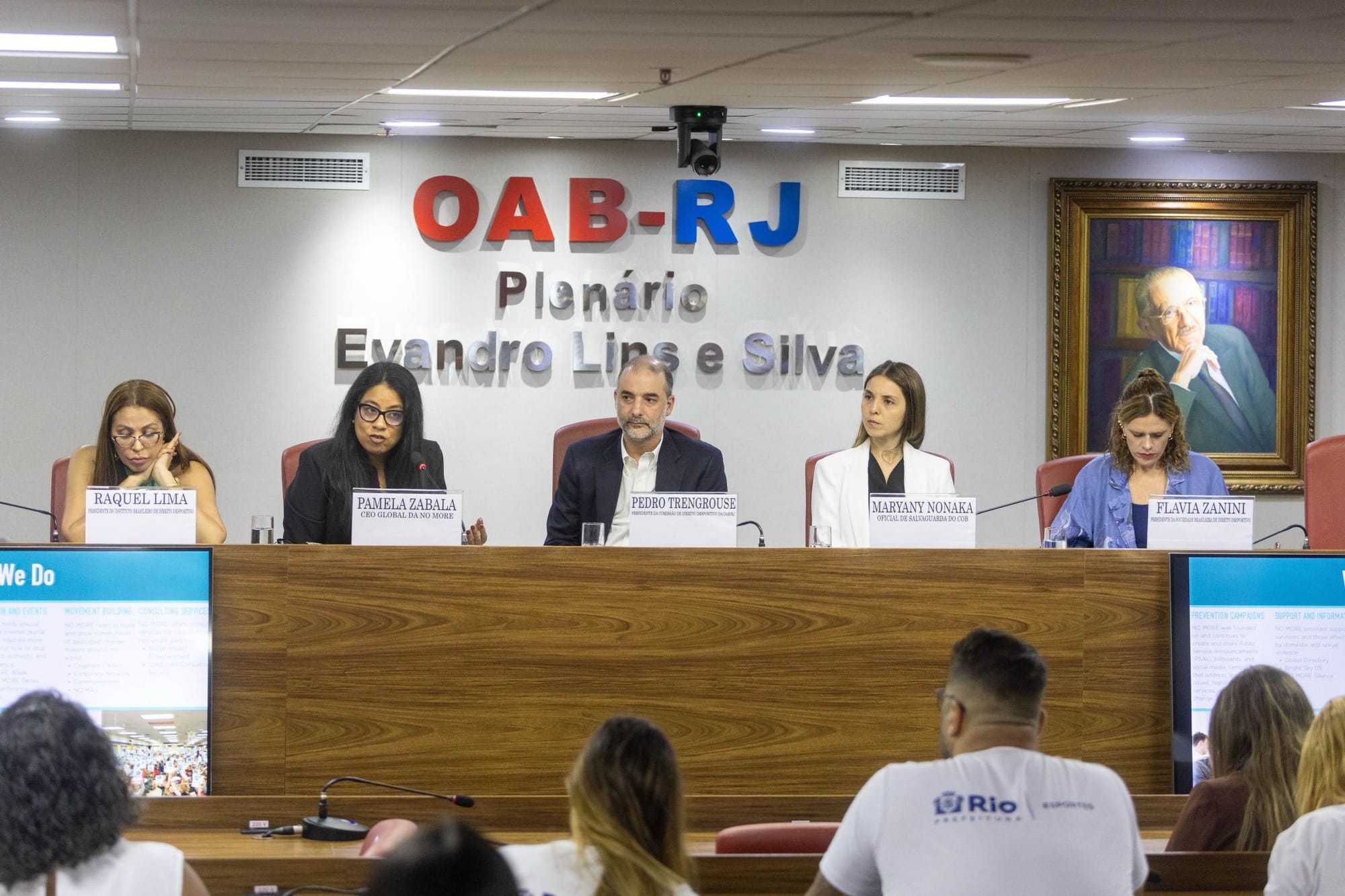
This guest post by Pedro Trengrouse, International Sports Lawyer, Academic Coordinator of the FGV/FIFA/CIES International Sports Management Programme, and President of the FIFA Master Alumni Association, reflects on how the upcoming FIFA Women's World Cup is an opportunity to mobilize against gender-based violence.
When Brazil hosted the 2014 Men’s World Cup, the national focus was infrastructure. Stadiums were built. Airports were expanded. Hotels multiplied.
When Brazil hosts the 2027 FIFA Women’s World Cup, the challenge will be different and far more meaningful. The infrastructure already exists. The real opportunity now is to build something less visible but far more lasting: citizenship, safety, and equality for women.
Major sporting events are not just competitions. They are cultural accelerators. They shape conversations, influence norms, and reach millions of people at once. The Women’s World Cup in 2027 offers Brazil, and the global sports community, a powerful platform to confront one of the most urgent issues of our time: gender-based violence.
Brazil faces alarmingly high levels of gender-based violence. In 2025, the country recorded approximately 1,518 femicides, averaging about four women killed each day because of their gender, the highest number since the crime was legally defined in 2015. Reports of rape remain among the highest in recent history, with nearly 72,000 cases recorded in 2024, the equivalent of almost 200 rapes per day.
These numbers are not abstract. They represent lives interrupted, families devastated, and communities deeply affected.
Research from the Brazilian Forum on Public Security highlights a troubling pattern: on days when local football teams play, threats against women increase significantly, and cases of intentional bodily injury also rise. Sport itself does not cause violence. However, emotional intensity, alcohol abuse, and deeply rooted norms around masculinity can create environments where violence escalates.
But, if sport can amplify harmful behavior, it can also amplify positive change.
A Global Moment for Leadership
The 2027 Women’s World Cup will take place in a symbolic global context. The world recently marked the 30th anniversary of the Beijing Declaration and Platform for Action, a milestone in the movement for women’s rights. In 1995, only a limited number of countries had laws addressing domestic violence. Today, nearly every nation has adopted some form of legislation.
Progress is possible. Cultural norms can shift. Systems can improve. And sport can help accelerate that progress.
Initiatives such as Football for the Goals demonstrate how the global football ecosystem can advance the Sustainable Development Goals, including gender equality and the elimination of violence against women and girls. The Women’s World Cup creates a rare convergence of media attention, corporate investment, athlete leadership, and public enthusiasm.
That convergence can be used to normalize conversations about domestic and sexual violence, promote healthy models of masculinity and allyship, strengthen prevention and response systems, highlight survivor support services, and encourage active bystander engagement across communities.
The visibility of the tournament can reduce stigma and silence around abuse. When athletes, coaches, broadcasters, and sponsors speak clearly about respect and safety, the message travels far beyond the stadium.

Civil Society Does Not Have to Wait
While federations and organizing committees are essential, they are not the only actors capable of driving change. Civil society, universities, advocacy groups and responsible businesses can organize independently to create lasting impact before, during, and after 2027.
A true legacy does not require permission. It requires coordination.
Brazil could develop a unified Safe Sport framework aligned with international standards, offering model safeguarding policies, centralized reporting mechanisms, and standardized investigative procedures accessible to all.
Even before formal regulatory mandates, civil society coalitions can design toolkits, training programs, and monitoring systems that establish a national benchmark.
An independent reporting portal, connected to survivor support services, could ensure consistent case management and referral pathways. Fragmented responses erode trust. Standardized systems strengthen it.
Education must also be continuous. A national training and certification program on violence prevention in sport could provide tailored modules for athletes, coaches, administrators, and safeguarding officers. Hybrid learning platforms, digital certification, and annual updates would guarantee scale and sustainability beyond the tournament itself.
Evidence matters as well. Longitudinal research examining the relationship between sport and gender based violence before and after 2027 could provide measurable data on awareness, reporting confidence, and cultural attitudes. Public reporting builds accountability. Data strengthens policy.
Civil society can also convene global dialogue. International conferences held during the Women’s World Cup, in partnership with multilateral organizations and academic institutions, could position Brazil as a reference point for safe sport governance and gender equality innovation.
And cultural mobilization is equally powerful. Large public events, artistic festivals, youth leadership forums, and nationwide awareness campaigns connected to International Women’s Day in 2027 could transform the tournament into a moment of national reflection and collective commitment.
This is not a marketing campaign. It is architecture for transformation.
Concrete Actions for 2027
To ensure that the 2027 Women’s World Cup leaves a measurable social legacy, stakeholders across sectors can take coordinated and practical action.
Prevention should be integrated into event planning from the outset, with safeguarding protocols, public awareness campaigns, and formal partnerships with domestic violence prevention organizations embedded in the official legacy strategy.
Broadcast platforms can also be leveraged intentionally by incorporating public service messaging and clear information about national support services into match transmissions and digital channels.
The broader tournament ecosystem should be prepared as well. Event staff, volunteers, security personnel, and team representatives can be trained to recognize and respond appropriately to signs of abuse, harassment, or exploitation. Men and boys must be engaged as allies, with visible male role models in sport openly championing equality and nonviolence. Local support networks should be strengthened to ensure that organizations assisting survivors are adequately resourced to respond to increased demand during major sporting events. Finally, fans themselves can be invited into the solution by taking pledges, participating in awareness initiatives, and publicly reinforcing a culture of zero tolerance for violence.
A Different Way to Measure Success
The Women’s World Cup is not only about celebrating elite athletes. It is about redefining leadership in sport.
Instead of measuring success solely by ticket sales or television ratings, Brazil can evaluate impact through the adoption of unified safeguarding standards, the number of institutions trained and certified, increased access to reporting and survivor services, greater public awareness of gender based violence, and measurable shifts in public attitudes toward equality.
The Women’s World Cup can help build a future where girls grow up not only dreaming of scoring goals, but living free from fear. It is not just football for them. It is a platform for dignity, safety, and equality.
And if we choose to use it intentionally, 2027 can mark the moment when sport helped move culture forward.
Brazil has the opportunity to become a true watershed for the world, a living laboratory demonstrating how a global tournament can exponentially amplify social impact when equality and safety are embedded into its core strategy.
By aligning public institutions, civil society, athletes, sponsors, media, and communities around a shared commitment to ending violence against women, the 2027 Women’s World Cup can prove that major sporting events are not only spectacles, but engines of transformation.
This tournament can show that a World Cup does much more than crown champions. It can protect lives, shift norms, strengthen systems, and leave behind a legacy that endures long after the final whistle.
Learn more about how organizations and advocates are responding to gender-based violence throughout Latin America on our NO MORE Week Regional Playlist on YouTube.
To seek help or find a support service near you, visit the NO MORE Global Directory.
Together We Can End Domestic and Sexual Violence