
15 Years of Work to End the Backlog: A Reflection on How Far We’ve Come

Each day during NO MORE Week, we’re highlighting how communities around the world are taking action to end abuse. Today, join us on the KNOW MORE Blog and NO MORE’s social channels as we spotlight efforts throughout North America.
This guest post by the Joyful Heart Foundation reflects on their End the Backlog campaign, an incredible ongoing effort to bring justice to sexual assault survivors throughout America.
Fifteen years ago, the Joyful Heart Foundation made ending the rape kit backlog our central mission. After a wave of investigations revealed that tens of thousands of untested rape kits were sitting in storage across the country, our team dedicated ourselves to ensuring all of them were inventoried and tested. Led by our founder Mariska Hargitay, we were resolved to support survivors and their path to healing and justice. Every single kit represented a survivor who had endured a four-to-six-hour forensic exam, only for their evidence to be abandoned. This systemic neglect had to be addressed.
The End the Backlog campaign started with a mission to test all kits, but it was also about confronting a system that told survivors they didn’t matter and fighting for the accountability and justice that they deserved. What drove us then, and what still drives us, is the courage of survivors who shared their stories, channeled pain and rage into advocacy, and partnered with us to push for transformative legislation. They knew from experience what survivors needed. Their courage and wisdom has been the single most powerful force behind everything we’ve built.
Where We Started and How Far We’ve Come
Five years into our work, the federal government launched the Sexual Assault Kit Initiative (SAKI). By then, the backlog had reached its peak with an estimated 300,000 to 400,000 untested kits. What followed was a decade of sustained, bipartisan commitment with $419 million in funding dedicated to 96 agencies in 44 states.
The SAKI impact: more than 345,000 kits have been inventoried or sent for testing, and nearly 97,400 have been tested. More than 39,000 DNA profiles have been uploaded to CODIS, the national DNA database used to investigate crimes, producing more than 19,000 matches and identifying over 10,000 serial violent offenders. In Wayne County alone, 11,341 previously untested kits led to the identification of 858 suspected serial rapists. Testing kits has delivered justice for survivors and made communities safer for everyone.
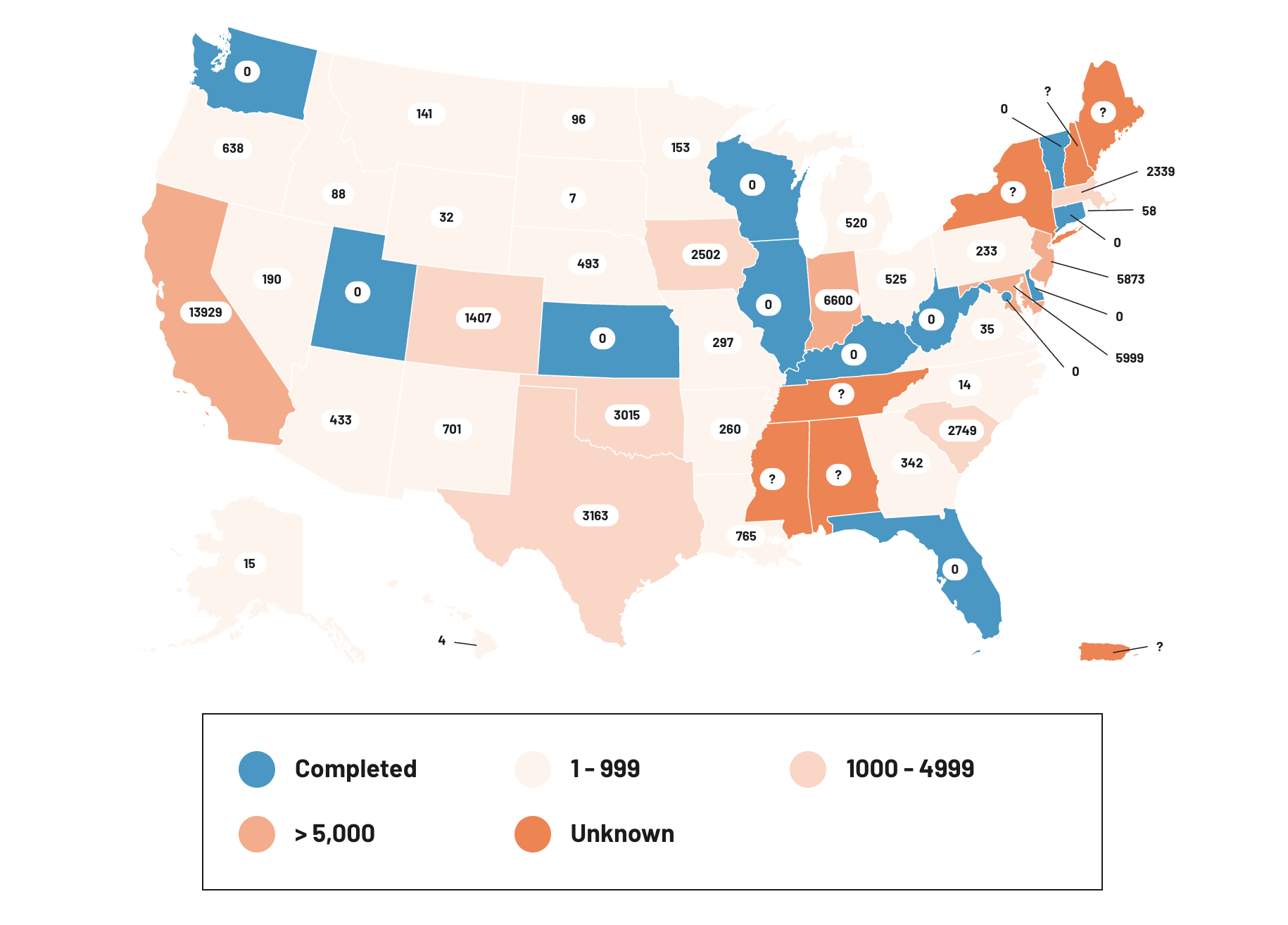
The numbers only tell part of the story. We’ve also helped drive a cultural shift toward more survivor-centered, trauma-informed systems in every state. Our six pillars of comprehensive rape kit reform provided a roadmap for communities to show up for survivors. These pillars have have been adopted in the majority of states, creating inventories of untested kits, multi-disciplinary backlog elimination projects, tracking systems that increase transparency around kit handling and that let survivors check the status of their kit any time, and sustained funding to ensure these changes are lasting and backlogs do not recur (see the map—and where your state stands—here).
We’re Still in This Fight
Today, an estimated 54,351 untested kits remain across the country: far fewer than when we started, but not zero. Our work is not done. In 2025 alone, 19 new bills were signed into law to address the rape kit backlog, 9 of which were critical funding measures to prevent future backlogs.
We’re also launching a new initiative focused on DNA collection from qualifying offenders. Many states have laws requiring offenders to submit DNA samples, but collection doesn’t always happen. In fact, the U.S. Department of Justice estimates that each state in the country likely has 40,000–50,000 uncollected offender samples. Closing that gap means law enforcement can link cases and make full use of the evidence survivors provided which is both a matter of justice and public safety.
Our work has also expanded to address the statute of limitations for sexual assault, which far too often prevents survivors from seeking justice. These time limits are being extended and in some states, eliminated entirely. We know it often takes years or even decades to begin processing trauma, let alone consider pursuing legal action. Our laws must reflect that reality.
In the last fifteen years, we’ve worked hard to send a resounding message that survivors always matter. That message must be backed with results: laws passed, new systems implemented, culture change, and a clear path toward healing and justice for all survivors. We are proud of how far we’ve come, and we’re not finished. We will keep going until we end the backlog forever.
With hope,
Robyn Mazur and Ilse Knecht
Joyful Heart Foundation
joyfulheartfoundation.org | endthebacklog.org
Juntos podemos acabar com a violência doméstica e sexual